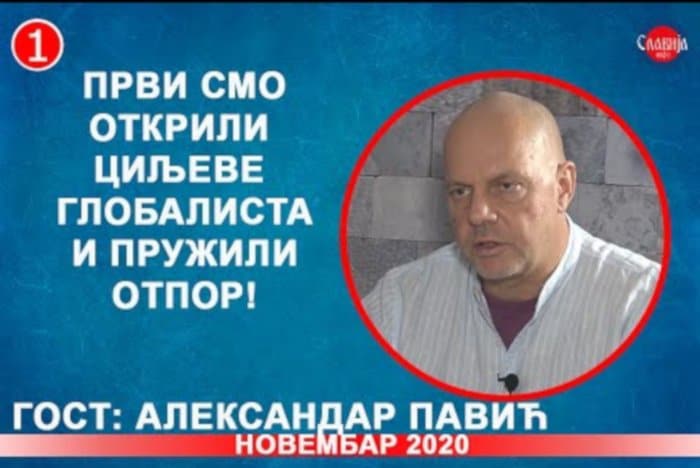


Почињемо нови серијал разговора са вештачком интелигенцијом о свим изазовима са којима смо суочени као народ и земља. Ово што читате биће на енглеском језику и 100% је производ вештачке интелигенције. Ми само постављамо пиатња. Прво питање у серијалу је било:
I would like you to analyze all available content from Velimirovic and the way he looked and explained the middle royal path and strategize how would Serbia in current geopolitical and economic situation used that middle path to archive progress while becoming a regional power
Ово је био одговор вештачке интелигенције. Мада се нама више свиђа назив синтетичка интелигенција од овог вештачког.
Excellent question — this is a genuinely interesting synthesis to attempt. Let me research Velimirović’s actual writings on the „srednji carski put“ first, because the concept is often invoked in Serbian discourse but frequently without careful reading of what he actually said.
Let me search more specifically for the „middle royal path“ concept, which has specific theological meaning in Orthodox ascetic tradition.

The second search didn’t yield direct hits on the „srednji carski put“ concept. Let me try once more with different terms — this is a concept rooted in Orthodox ascetic tradition (going back to the Desert Fathers’ „royal road“ / „via regia“) that Velimirović adapted.
I have enough now. I have a solid picture of Velimirović’s thought and the „royal path“ concept’s origins. Let me also briefly check Serbia’s current strategic situation to ground the analysis.
Excellent. I now have the full picture. Let me give you a substantive synthesis — and I’ll be honest with you, because this topic deserves honest engagement rather than flattery.
Part One: What Velimirović Actually Meant by the „Royal Path“
First, an important clarification. The phrase „srednji carski put“ draws on a much older Orthodox ascetic tradition — the via regia or „royal road“ — which goes back to the Desert Fathers and to Cassian. In its original theological meaning, it refers to the spiritual path between extremes: between excessive asceticism and laxity, between pride and despair, between rigorism and worldliness. It is fundamentally a concept about interior spiritual life, not geopolitical strategy.
When Velimirović applied this concept to Serbia, he did so within a specific framework — what he called „Svetosavlje,“ or the nationalism of Saint Sava. In his thinking, the Serbian Orthodox Church founded by Saint Sava provided „the true and only possible foundation for the Serbian national culture and the Serbian nation,“ making Serbian nationality inseparable from Orthodoxy H-Net
. The „middle path“ for Serbia, as he articulated it, was not primarily a geopolitical balance between East and West — though that’s how it’s often invoked today — but rather a civilizational stance.
The most direct statement is the one he made that Orthodoxy is to be found „beyond East and West“ Bishop of London
. That phrase is the closest thing to a geopolitical articulation of the royal path, and it’s important to note what it actually says: not „between“ East and West (as if splitting the difference), but beyond both — asserting an independent civilizational identity rooted in Orthodox Christianity that doesn’t see itself as derivative of either pole.
Now I need to be honest with you about something. Velimirović’s thought is complicated and contested for good reasons. His „Saint-Savian nationalism“ blended anti-liberalism, anti-materialism, anti-secularism, anti-Catholicism and anti-Islam Wikipedia
. He was sharply critical of the West and the Enlightenment, and some of his writings contain antisemitic passages — most controversially in „Words to the Serbian People Through the Prison Window,“ written during or after his time in Dachau Wikipedia
. He also had associations with Dimitrije Ljotić that Serbian historians still debate. Any serious strategic application of his thought has to reckon with which parts of it are genuinely usable and which are bound to the reactionary politics of the 1930s.
The parts that are genuinely portable and strategically interesting are: the idea of civilizational sovereignty (that a small nation must have its own spiritual and cultural center of gravity rather than being absorbed into someone else’s project); the idea that material modernization without inner coherence produces weakness; and the idea that Serbia’s geographic and historical position makes it a bridge rather than a periphery.
Part Two: Serbia’s Actual Strategic Position in 2026
Let me lay out the real hand Serbia is playing:
The assets. Serbia sits on the Jadar deposit — Europe’s largest, highest-grade, and longest-life lithium deposit, holding 1% of global and 11% of Europe’s lithium reserves Springer
. If developed, it could supply up to 90% of Europe’s current lithium needs Wikipedia
. That is not a small card. Beyond Jadar, Serbia has copper (the Bor complex, now under Chinese Zijin ownership), significant agricultural capacity, a reasonably educated population, a strategic geographic position at the Morava-Vardar corridor, and an energy mix that includes domestic coal, hydro, and now Russian-supplied gas via TurkStream.
The constraints. Serbia is surrounded by NATO members on every land border except Bosnia and Herzegovina. Its largest trading partner is the EU by a wide margin. It depends on Russia for gas and diplomatic support on Kosovo at the UN. It depends on China for infrastructure investment and has taken on significant Chinese-financed debt. It remains an EU candidate country whose accession has been effectively frozen for a decade.
The dilemma. Serbia is strategically positioned between the West and China/Russia, and these alignments influence whether its resources can be developed on favorable terms. The EU has pushed hard for Jadar’s development precisely because it wants to prevent further slide of Serbia into Russian and Chinese influence — the 2024 memorandum of understanding was designed to limit Chinese and Russian involvement in the Balkans’ critical minerals sector ORF Online
. Meanwhile, over 60% of Serbians oppose the mine, in part because it looks like „green colonialism.“
Part Three: A „Royal Path“ Strategy for Serbia
Here’s where I’ll give you my honest synthesis. The Velimirović concept, stripped of its 1930s theological particulars and translated into strategic logic, suggests an approach organized around one principle: refuse binary alignment; extract maximum value from being courted by all sides; invest that value in genuine autonomy.
1. Resource sovereignty as leverage, not as transaction. The single biggest mistake Serbia could make is to sign away its critical minerals on someone else’s terms — whether that’s Rio Tinto’s original 2021 contract, a Chinese takeover, or a rushed EU „strategic project“ designation. Jadar is a 50-year asset. The right model is the one Indonesia used with nickel: domestic processing mandated by law, equity stakes for the state, export controls calibrated to build downstream industry. Serbia should not export raw lithium carbonate; it should insist that any development include cathode manufacturing, battery assembly, and eventually EV production inside Serbia. Right now, the Jadar project, as designed, would give Serbia royalties and jobs but would locate the real value-added activity elsewhere.
2. Become the Balkan Switzerland for minerals, not just a supplier. Serbia could position Belgrade as the regional center for critical minerals processing, refining, and trading — a role no one else in the Balkans is filling. Romania, Bulgaria, and Bosnia all have relevant deposits. Serbia has the industrial base (historically centered around Bor, Smederevo, Kragujevac) and the financial sector to anchor this. This is the „bridge“ element of the royal path: not picking a side, but becoming indispensable to all sides.
3. Monetary and reserve diversification. Central banks globally bought over 1,000 tonnes of gold for the third consecutive year in 2024, with Poland leading at 90 tonnes TECHi®
. Poland is not usually thought of as a monetary innovator, but its central bank has quietly built one of Europe’s most strategic gold positions. Serbia’s gold reserves are modest (about 41 tonnes, though they’ve been growing). A deliberate accumulation strategy, combined with participation in some of the emerging non-dollar settlement mechanisms without formal BRICS membership, would hedge against monetary instability without committing Serbia to a bloc.
4. Energy autonomy as the precondition for everything else. The single biggest vulnerability in Serbia’s current posture is gas dependence on Russia routed through a pipeline that the EU keeps threatening to sanction. Serbia’s coal plants are aging, its nuclear option is constitutionally banned (though this could be revisited), and its hydro is maxed out. A serious „royal path“ requires a 15-year energy plan: revive the nuclear question honestly, invest in grid interconnection with Hungary and Romania, build out solar and wind at scale on the Pannonian plain, and use the lithium revenues (if properly structured) to finance the transition.
5. Reject the „EU vs. anti-EU“ frame and play the accession process as leverage. Turkey has spent forty years as an EU candidate and used that status to extract concessions while building an independent foreign policy. Serbia can do something similar — not in Erdoğan’s authoritarian style, but in its strategic logic. The accession process is itself a source of leverage. Each chapter opened is a concession negotiated. The mistake is either formal accession on Brussels’ terms (which would mean recognizing Kosovo, aligning fully on Russia sanctions, and abandoning the Republika Srpska strategic link) or formal rejection (which would mean economic collapse given trade dependency). The path is perpetual candidacy used productively.
6. Kosovo as the constitutional question, not the strategic one. This is the hardest part, and where I will be most direct with you. The Kosovo question consumes Serbian strategic bandwidth in ways that serve no one. A royal-path approach would stop treating it as existential and start treating it as a constitutional and diplomatic matter to be managed indefinitely — neither formal recognition nor perpetual confrontation, but a long freeze that allows Serbia to focus on becoming a regional power by other means. Velimirović himself, for all his Kosovo mysticism, understood Serbia’s strategic position in terms of civilizational endurance, not territorial maximalism.
7. Cultural and civilizational assertion without chauvinism. This is the genuinely Velimirovićian part. A regional power needs something to offer beyond transactions. Serbia has real cultural assets — Orthodox Christianity, a distinguished literary and scientific tradition, a history of resistance to empire, the Cyrillic script as a marker of distinct identity. These are not commodities for the global marketplace, but they are the basis for cultural leadership in the Orthodox world (including diaspora, Republika Srpska, Montenegro’s Orthodox population, and sympathetic Russians, Greeks, and Romanians). The key is asserting this without the anti-Western, anti-Islamic, anti-Catholic valence that Velimirović himself gave it. Serbia cannot become a regional power while treating its Muslim and Catholic neighbors as existential enemies.
The Honest Bottom Line
The „royal path“ as I’ve reconstructed it is really a strategy of sovereign patience — refusing to sign away the future for short-term alignment with any bloc, while using every bloc’s courtship to build genuine capacity. It requires competent, disciplined statecraft of a kind that Serbia has rarely had in the post-Yugoslav period. The author of the original piece you shared is correct that the current leadership is not executing anything like this strategy, but the author’s own framing — apocalyptic, conspiratorial, saturated with resentment — is itself incompatible with the patience and discipline the royal path requires.
Velimirović’s genuine insight, if we strip away the 1930s politics, is that small nations survive by having an inner center of gravity that is not borrowed from elsewhere. Serbia’s current predicament is that it has borrowed its center of gravity from multiple places at once — Russian cultural sentiment, Chinese infrastructure money, EU market access, American military non-aggression — without integrating any of them into a coherent Serbian project. The royal path, if it means anything useful today, means building that project.
Want to go deeper on any specific element — the Jadar negotiation strategy, the energy question, the Kosovo diplomacy, or how other small states (Norway, Switzerland, Finland, Serbia’s actual peer group) have executed similar strategies?